
Step 1
Athletic Facility Assessment
We assess the field dimensions, sport authority requirements, existing drainage infrastructure, access for equipment and materials, and facility scheduling constraints before any scope is established.
Loading...
Service Detail
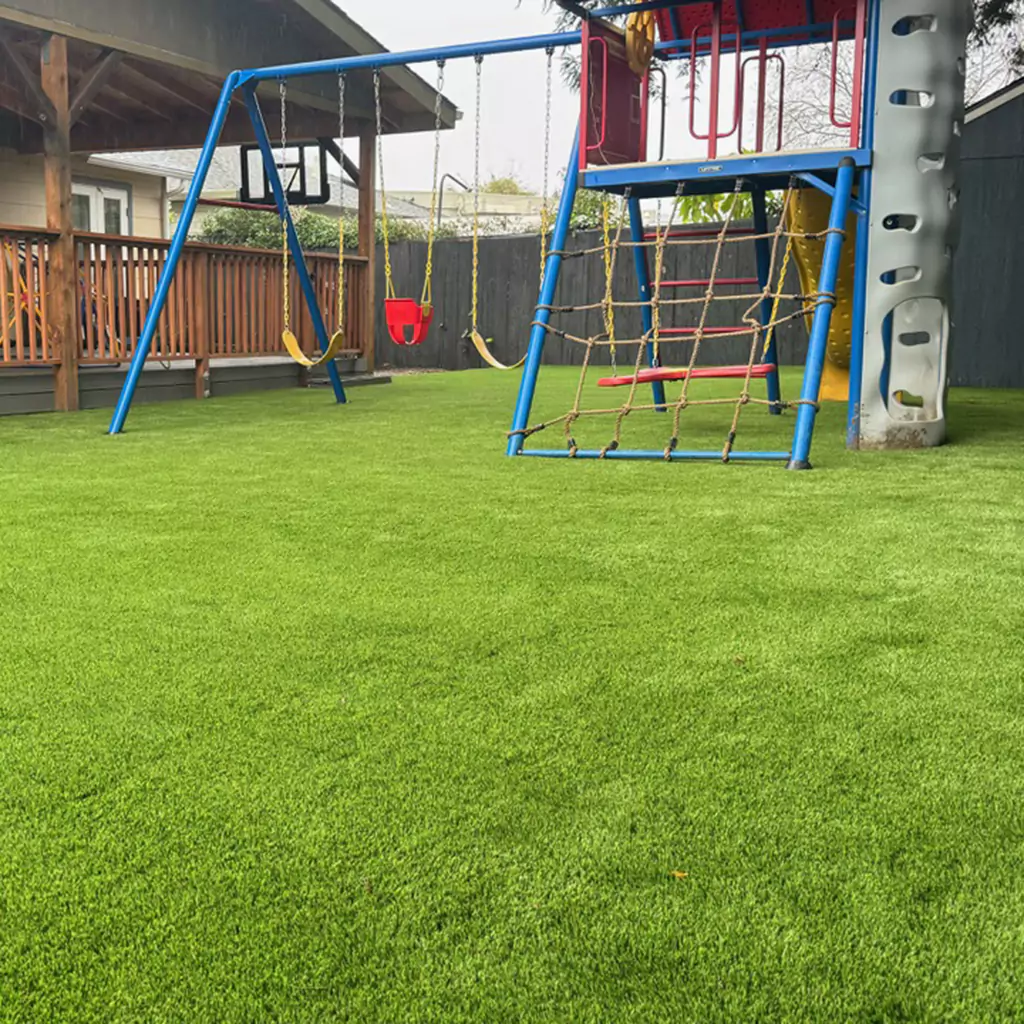
Athletic field artificial turf installation for Friendswood ISD campuses, recreational leagues, and private sports facilities in the South Belt area.
Main Introduction
Athletic fields in Friendswood operate in the same environmental conditions that define every outdoor project in this community: Gulf Coast humidity, clay-dominant soil, and a rainfall calendar that delivers 60-plus inches per year with periodic extreme events. Natural grass athletic fields in Friendswood and the surrounding South Belt area spend significant portions of the year either recovering from flood damage, fighting disease pressure in the humidity, or looking bare and rutted in the high-traffic zones around goals, dugouts, and baseline paths.
Artificial turf for athletic applications is a fundamentally different product and installation scope than residential lawn turf. Athletic fields require infill systems that manage impact attenuation — the G-max values that protect athletes during falls and tackles — in addition to drainage capacity, seam durability under repeated high-load use, and surface consistency across the entire field. Friendswood ISD campuses, recreational league facilities, and private training facilities in the South Belt corridor all have specific performance requirements based on the sport or activity the surface supports.
Artificial Grass of Friendswood approaches athletic installations with the engineering detail those requirements demand. We don't use residential-grade turf on athletic applications. Base construction for athletic fields follows sport-specific specifications, infill type and depth are selected for the intended activity's impact requirements, and seam placement is engineered to avoid player routes and high-stress zones.
What Is Included
Athletic field installations include sport-specific assessment, detailed base engineering, and performance verification before the field is turned over to coaches, administrators, or facility managers. The scope is significantly more complex than residential or commercial turf because athletic fields have safety standards, sport authority specifications, and daily use volumes that residential products and installation methods are not designed to meet.
Base construction for athletic applications typically requires deeper excavation, higher-specification aggregate layers, and drainage infrastructure capable of handling the concentrated rainfall events common in Friendswood. A field that holds standing water after a thunderstorm cannot be used safely and delays practices, games, and events — the drainage system is engineered to move water off the field quickly and route it through the facility's existing storm infrastructure.
Infill selection for athletic fields is based on the sport's impact attenuation requirements and the expected temperature conditions of the surface. South Texas heat creates elevated surface temperatures on synthetic athletic fields during summer practices and early fall games — infill technology that manages heat is a meaningful safety and comfort consideration for student athletes and youth league players.
Process Steps
Step 1
We assess the field dimensions, sport authority requirements, existing drainage infrastructure, access for equipment and materials, and facility scheduling constraints before any scope is established.
Step 2
Excavation is performed to sport-specific depth, sub-base drainage is installed and integrated with facility storm systems, and aggregate base layers are compacted to engineering specifications.
Step 3
Sport-grade turf is installed with seam placement engineered to avoid primary player routes and high-stress field zones, secured across the full field perimeter and at any transition points.
Step 4
Sport-specific infill is installed at prescribed depth and mechanically distributed evenly across the field, followed by impact attenuation testing to verify performance within sport authority safety standards.
Step 5
Field markings are installed per sport specification, and facility managers receive documentation covering maintenance schedules, inspection intervals, and performance verification procedures.
Use Cases
Athletic field turf installations in the Friendswood area serve school campuses, recreational sports associations, private training facilities, and community parks.
School campuses need fields that stay usable through the full academic and athletic calendar — including the Gulf Coast wet season — without the maintenance downtime and recovery periods that natural grass fields require after heavy use or flooding.
Youth soccer, flag football, and baseball leagues in the South Belt area benefit from consistent, well-drained surfaces that support multiple games per week without accumulating the ruts and bare zones that natural grass develops under repeated use.
Private athletic training facilities in Pearland, League City, and the Beltway 8 south corridor use sport-grade turf for training fields that need to perform consistently regardless of weather and support high-intensity daily use.
Parks in flood-affected communities like Friendswood benefit from athletic turf that recovers to full playability within hours of a rain event rather than days or weeks, improving community access to recreational facilities after South Texas storm events.
Why Choose
Athletic field installation in Friendswood requires a contractor who understands both the technical performance specifications of sport surfaces and the environmental context of South Texas Gulf Coast weather. A field that meets G-max standards in a lab but can't drain a two-inch-per-hour rain event quickly enough to stay on schedule for evening games is a facility management problem, not a solution.
Artificial Grass of Friendswood builds athletic field drainage systems with the rainfall intensity this area actually delivers. We understand that Friendswood ISD schedules, recreational league calendars, and facility operators cannot afford extended field closures due to standing water or surface failure. Our athletic installations prioritize drainage capacity alongside performance specifications because in this climate, they're inseparable.
Pricing Factors
Athletic field pricing is built from sport-specific engineering requirements and site conditions. We provide detailed estimates after site assessment and specification review so facility administrators can plan budgets with clear scope understanding.
Service Area Coverage
Athletic field artificial turf installation is available throughout the Friendswood and South Belt service area, including Friendswood ISD campuses, Pearland recreational facilities, League City sports complexes, and the Houston Beltway 8 south athletic corridor.
Related Services
Frequently Asked Questions
Athletic field installations are built to sport-specific impact attenuation requirements with G-max testing verification. We review applicable sport authority specifications during the assessment phase so base and infill systems are specified appropriately for the facility's intended sport and competition level.
A properly drained synthetic athletic field typically returns to full use within one to four hours after a rain event stops, depending on rainfall volume. Compare this to natural grass fields that may require 24 to 72 hours to firm up to safe playing condition after significant rain — a major scheduling advantage for school and recreational league programs.
Surface temperature on synthetic athletic fields in direct South Texas summer sun is a legitimate safety consideration. We discuss infill options with heat-reduction properties, shade infrastructure if applicable, and scheduling guidance for peak summer heat periods to help facility managers protect athlete safety.
Yes. Athletic field installations include sub-base drainage engineering as a standard component. For facilities with documented drainage deficiencies — including those that have experienced flooding from South Texas storm events — we design drainage systems that integrate with the facility's existing storm infrastructure to achieve the field recovery times the facility needs.
Final CTA
Submit the form with service type, property address, and timeline details. You can also call directly for scheduling support.
Call