Step 1
Maintenance Assessment
We walk the full turf area documenting fiber condition, infill levels, edge integrity, seam condition, and any drainage concerns before any maintenance work begins.
Loading...
Service Detail
Artificial turf maintenance and repair for Friendswood, TX properties — including seasonal debris management, infill correction, seam repair, and post-storm inspection.
Main Introduction
Artificial turf in Friendswood operates in conditions that accelerate maintenance needs compared to drier climates. The mature pecan and live oak canopy that defines neighborhoods like Forest Bend and Heritage Park drops significant organic debris across two distinct seasons — live oak leaf exchange in late winter and pecan drop through fall. That organic material, left on turf in high humidity, can cause surface staining, create conditions for moss or algae growth in shaded areas, and mat down fiber in ways that affect both appearance and drainage.
Post-storm inspection is a specific maintenance need that Friendswood turf owners face that most installation guides don't address. After a significant rain event — and Friendswood has experienced multiple events delivering more than ten inches in 24 hours — turf surfaces may accumulate debris carried in floodwater, infill displacement can occur in areas that experienced temporary submersion, and edge lifting or seam separation can result from soil movement under the base. None of these are failures of the turf system itself, but they require prompt inspection and correction to prevent secondary problems.
Artificial Grass of Friendswood provides maintenance and repair services tailored to what turf actually experiences in this community, not a generic maintenance schedule designed for a Phoenix climate. We understand the seasonal patterns of Friendswood's canopy debris, the flooding history of specific neighborhoods, and the inspection protocol that properly assesses turf condition after a significant storm event.
What Is Included
Maintenance and repair services cover the full range of upkeep needs that artificial turf in Friendswood's environment generates. For routine maintenance, this includes debris removal, power brushing in high-traffic fiber-compression zones, infill redistribution, edge inspection and re-securing, and drainage verification. For post-storm services, this includes debris clearance, flood damage assessment, infill correction, seam inspection, and documentation for insurance purposes if applicable.
Repair services address the specific failure modes that occur in Friendswood's climate and use conditions: seam separation from soil movement or root intrusion, edge lifting at fence lines and hardscape transitions, infill compaction in high-traffic zones, and localized fiber damage from heavy debris or equipment contact. We assess repair needs on-site and provide options that restore the turf to full performance without requiring section replacement unless the damage scope warrants it.
Process Steps
Step 1
We walk the full turf area documenting fiber condition, infill levels, edge integrity, seam condition, and any drainage concerns before any maintenance work begins.
Step 2
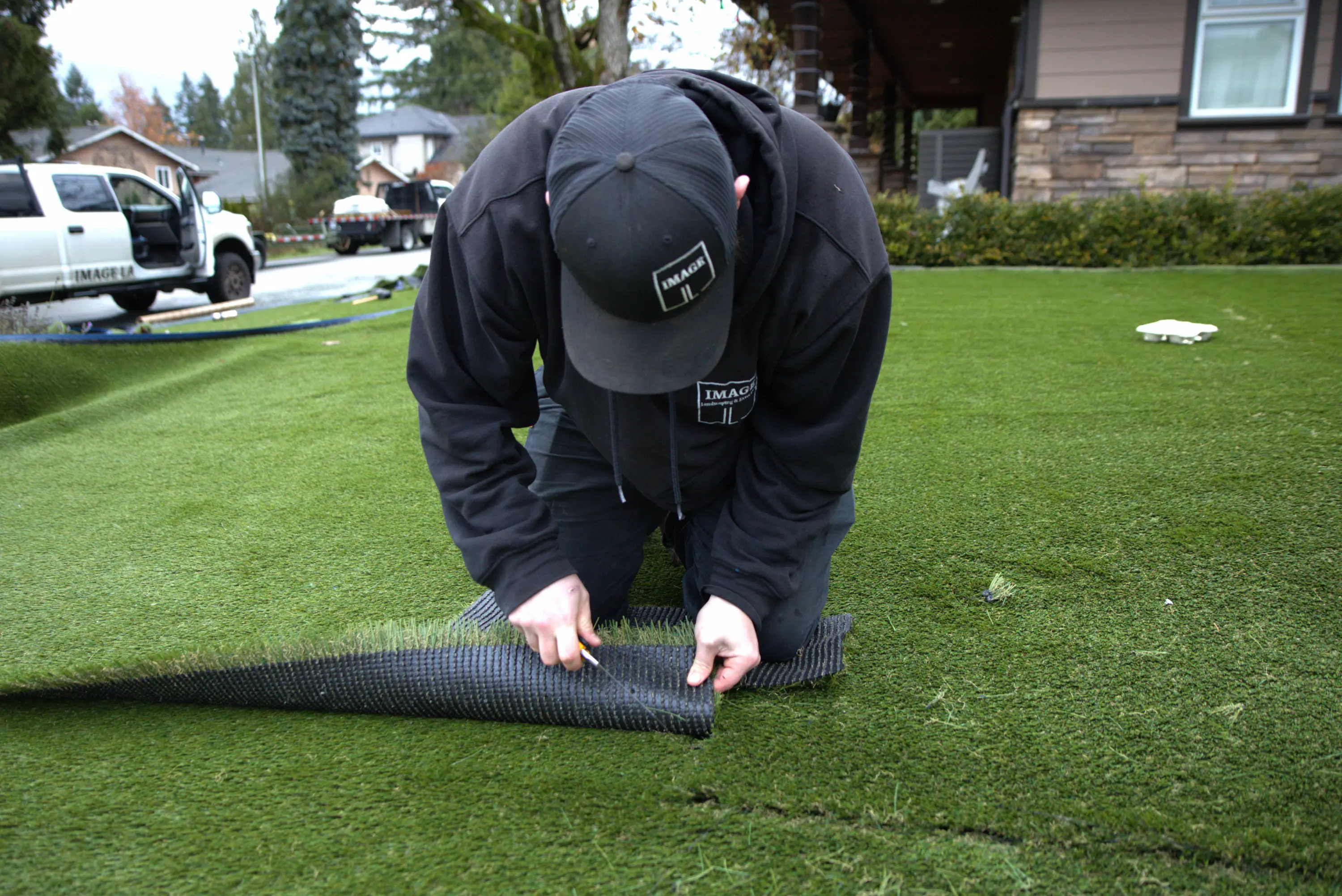
Organic debris is removed from the surface and from edge and seam channels, followed by power brushing in areas where fiber has compressed under foot traffic or debris accumulation.
Step 3
Infill levels are measured in key zones and redistributed or supplemented where depletion has reduced surface performance. Drainage paths are verified for clear flow to the base layer.
Step 4
Lifted edges are re-secured using appropriate fastening for the substrate type, and seam separations are repaired with commercial-grade adhesive and re-seaming procedures.
Step 5
A written service summary is provided covering work performed, any conditions identified for monitoring, and recommended timeline for the next maintenance interval.
Use Cases
Maintenance and repair services serve Friendswood turf owners across residential, commercial, and athletic applications, with particular emphasis on seasonal debris management and post-storm recovery specific to this community.
Forest Bend and Heritage Park homeowners with significant pecan and live oak coverage schedule maintenance visits around the major debris drop seasons to prevent organic material from matting into turf fiber and causing staining or drainage blockage.
After significant flooding events — as experienced repeatedly in Friendswood's Clear Creek watershed during Harvey, Imelda, and Beryl — property owners use post-storm assessment services to document turf condition, identify any base or infill displacement, and restore the surface to full performance.
Property managers for commercial and multifamily properties use scheduled maintenance programs to keep turf areas in consistent appearance without requiring in-house maintenance staff to learn turf-specific care protocols.
Properties with mature trees experience ongoing soil movement as root systems grow, which can cause edge lifting and in some cases base disruption under established turf. Repair services address these conditions before they affect a larger area of the installation.
Why Choose
Maintenance and repair for turf in Friendswood requires understanding what this community's specific conditions create. Canopy debris, flood recovery, and root system dynamics are not theoretical concerns here — they are the routine experience of turf ownership in an established suburb with 40-year tree canopy and a documented flooding history.
Artificial Grass of Friendswood provides maintenance services with that context built in. We don't apply a generic maintenance checklist. We look for the specific failure modes that South Texas heat, Gulf Coast humidity, mature organic debris, and periodic flooding events create in this community's turf installations, and we address them before they become replacement-scale problems.
Pricing Factors
Maintenance pricing is based on turf area and service scope documented during the initial assessment. Repair pricing reflects the type and extent of damage identified on-site. We provide itemized estimates for repair work before beginning so property owners understand the scope before authorizing additional work.
Service Area Coverage
Artificial turf maintenance and repair is available throughout Friendswood and surrounding South Belt service areas including Pearland, Alvin, Manvel, League City, Webster, South Houston, and Pasadena.
Related Services
Frequently Asked Questions
Frequency depends on canopy coverage and use level. Yards under significant pecan and live oak canopy typically benefit from maintenance visits in late winter after live oak leaf exchange and in late fall after pecan drop. High-traffic commercial or pet areas may need quarterly service. Post-storm inspection is recommended after any event delivering more than three inches of rain.
In most cases, flood-affected turf can be restored to full performance through debris removal, infill correction, edge re-securing, and seam repair. Complete replacement is needed only when flood water damage has undermined the base layer significantly. Post-storm assessment determines the appropriate scope.
Root intrusion that has lifted or separated a seam requires re-securing the edge, addressing any base disruption the root caused, and re-seaming with commercial-grade adhesive. In cases where continued root growth will create recurring separation, we discuss options including root barriers or turf layout modifications.
Yes. Post-storm assessments include a written condition report with observations on surface condition, base integrity, infill displacement, edge and seam status, and any areas requiring repair. This documentation can support insurance claims for storm-damaged turf in Friendswood and surrounding flood-prone communities.
Final CTA
Submit the form with service type, property address, and timeline details. You can also call directly for scheduling support.
Call