
Step 1
Infill Assessment
We measure infill depth in high-traffic zones, primary drainage paths, and low-gradient collection areas, noting current infill type, condition, and any organic contamination from canopy debris.
Loading...
Service Detail
Artificial turf infill replenishment for Friendswood, TX properties experiencing compaction, drainage slowdown, or reduced surface performance.
Main Introduction
Infill is the component of a turf system that most property owners don't think about until they notice a problem. It's what gives the turf its resilience, keeps fiber upright, provides drainage capacity within the face layer, and — in pet or athletic applications — delivers the performance characteristics the system was specified to provide. Over time, infill migrates, compacts, breaks down, or in the case of flooding events, displaces from the intended distribution pattern.
In Friendswood's environment, infill depletion happens through several mechanisms that aren't common in drier climates. Heavy rainfall events — including the extreme precipitation Friendswood has experienced during Harvey, Imelda, and Beryl — can displace infill from high-drainage paths and concentrate it in low-gradient areas of the turf. Organic debris from the community's mature pecan and live oak canopy, when left on the surface, can absorb into the infill layer and cause compaction and odor retention. And pet areas with heavy daily use experience infill compaction in primary traffic routes that gradually reduces drainage performance and surface resilience.
Artificial Grass of Friendswood provides infill assessment and replenishment as a standalone service for turf systems that are structurally sound but performing below the level they should. Getting the infill specification and distribution right for Friendswood's specific conditions — high humidity, periodic flooding, organic debris loading from mature canopy — is what separates an infill replenishment that restores performance from one that just adds material without addressing the underlying distribution or specification problem.
What Is Included
Infill replenishment service begins with an assessment of current infill levels across the turf area, including measurement in high-traffic zones, low-gradient collection areas, and any zones identified as underperforming. We document the existing infill type, condition, and distribution before recommending replenishment quantity and specification.
For properties where the current infill type is not performing well in Friendswood's environment — for example, a standard crumb rubber infill that wasn't specified for high-humidity pet use, or a sand infill that has compacted and reduced drainage performance — we discuss whether infill type should change along with quantity during replenishment. Sometimes the better solution is a partial flush of degraded infill and replacement with a better-matched product rather than simply adding more of the same material.
Process Steps
Step 1
We measure infill depth in high-traffic zones, primary drainage paths, and low-gradient collection areas, noting current infill type, condition, and any organic contamination from canopy debris.
Step 2
Based on assessment findings, we confirm whether the current infill type is appropriate for the property's use case and climate conditions, or whether a product change should accompany replenishment.
Step 3
In canopy-affected areas where organic debris has mixed into the infill layer, surface material is cleared before replenishment to prevent contaminated infill from being buried under new material.
Step 4
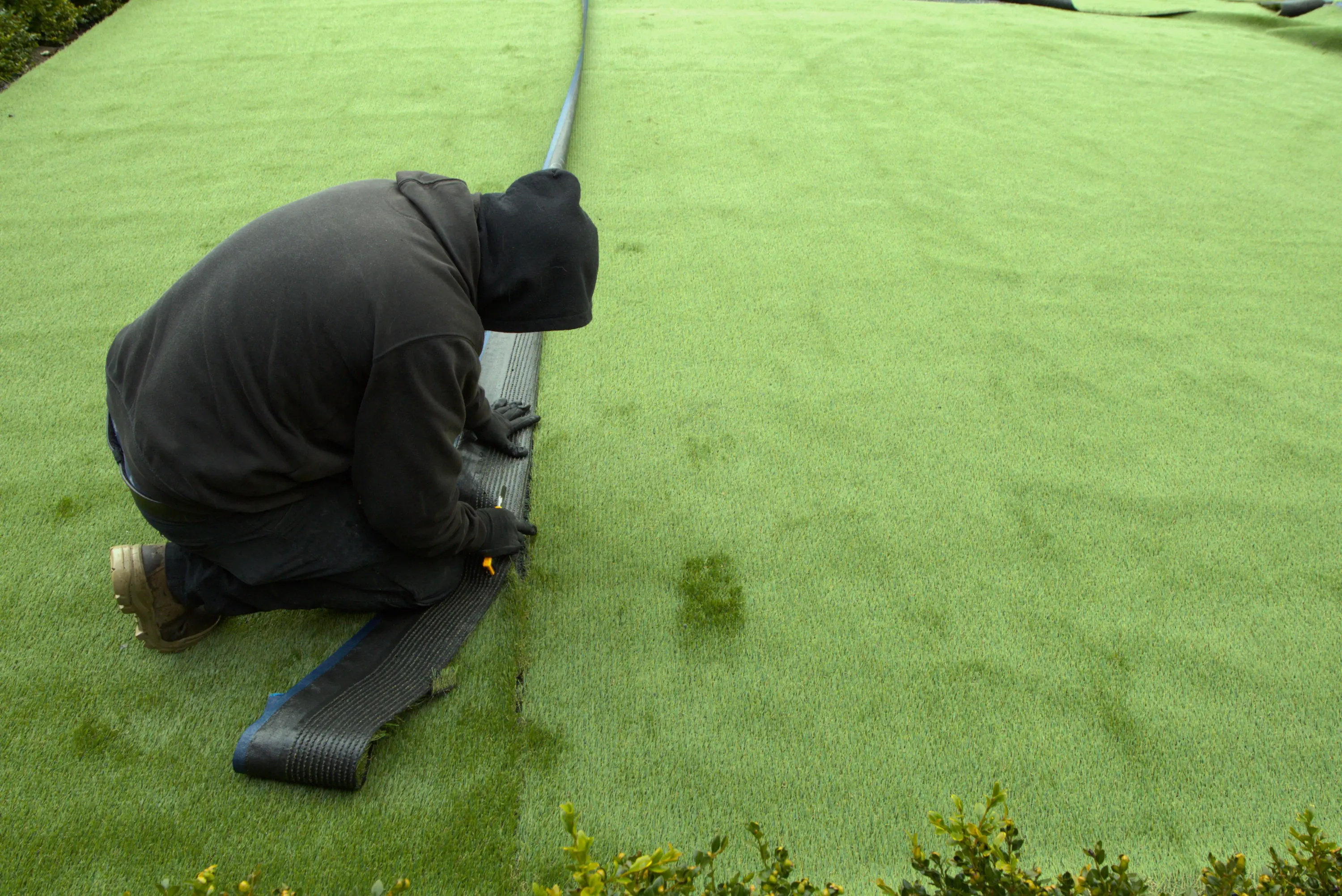
Replenishment infill is installed mechanically and distributed evenly across the turf area, with additional depth applied in high-traffic and high-use zones identified during assessment.
Step 5
Power brushing works new infill into the fiber base and restores fiber upright position, followed by drainage verification to confirm the replenishment has restored surface performance.
Use Cases
Infill replenishment is needed across residential, pet, commercial, and athletic turf applications in Friendswood, with timing driven by use volume, flood history, and organic debris loading from the community's mature tree canopy.
Properties that experienced flooding during Harvey, Imelda, Beryl, or other significant events may have infill displaced from its intended distribution pattern. Replenishment restores drainage and surface performance to pre-flood levels.
Pet turf areas with heavy daily use develop infill compaction in primary dog routes and elimination zones over one to three years. Replenishment with appropriate antimicrobial infill restores drainage performance and odor control.
Turf under Friendswood's mature pecan and live oak canopy accumulates organic debris that works into the infill layer over time. Replenishment following debris removal restores infill depth and drainage performance in heavily shaded areas.
Athletic fields in the Friendswood area require periodic infill level verification and replenishment to maintain impact attenuation performance within sport authority safety standards.
Why Choose
Infill replenishment for turf in Friendswood needs to account for what this community's environment does to infill over time. Flood displacement, organic contamination from mature canopy debris, and high-humidity degradation of some infill materials are the specific mechanisms that reduce infill performance here. Adding more of the same material without addressing those mechanisms doesn't restore full performance.
Artificial Grass of Friendswood assesses infill condition before recommending replenishment quantity and product to make sure the service actually solves the problem rather than temporarily masking it.
Pricing Factors
Infill replenishment pricing is based on the area to be treated and the volume and type of infill required. We provide a clear estimate after the assessment so property owners understand the scope before work begins.
Service Area Coverage
Artificial turf infill replenishment is available throughout Friendswood and surrounding South Belt areas including Pearland, Alvin, Manvel, League City, Webster, and South Houston.
Related Services
Frequently Asked Questions
Signs include reduced surface resilience when walking on the turf, fiber that stays flat rather than springing back after foot traffic, slower drainage in areas that used to drain quickly, and in pet areas, increased odor even after cleaning. Post-flood inspection often identifies infill displacement that isn't obvious from walking the surface.
Yes. Heavy rainfall events and temporary surface flooding can displace infill from its distributed position, concentrating it in low-gradient areas and depleting it from drainage zones and high-traffic paths. Post-flood infill assessment identifies where redistribution or replenishment is needed.
In some cases, yes. Original infill specifications that weren't matched to Friendswood's humidity conditions, pet use volume, or flooding history may underperform regardless of quantity. We assess the current infill type and condition during the initial evaluation and discuss whether a product change is warranted.
Athletic field infill should be assessed annually to verify impact attenuation performance remains within sport authority specifications. High-use fields may require replenishment every one to two years; lower-use fields may maintain appropriate levels for three to four years between treatments.
Final CTA
Submit the form with service type, property address, and timeline details. You can also call directly for scheduling support.
Call